
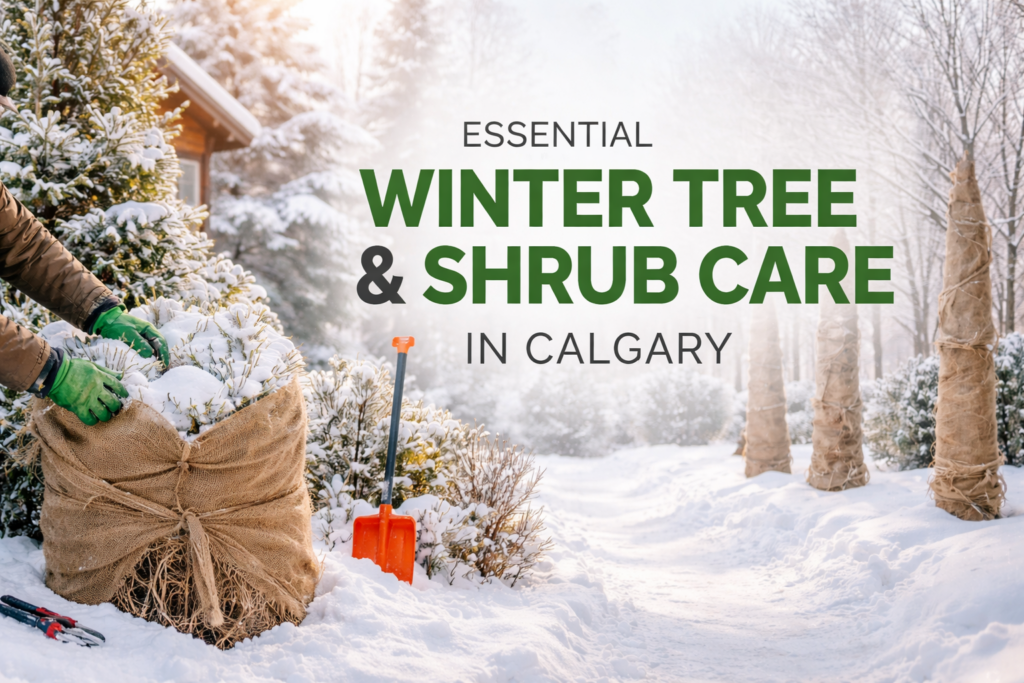
Calgary’s winters are a beautiful but brutal force of nature. While we enjoy the snowy scenery, our trees and shrubs face a long season of extreme challenges. From bitter chinook winds and deep freezes to hungry wildlife and heavy snow, the months from November to April can be tough on a landscape. However, with some thoughtful preparation and care, you can help your woody plants not just survive, but thrive come spring. This guide will walk you through the essential steps of winter tree and shrub care in Calgary, offering practical advice to fortify your garden against the elements.
Think of it as tucking your plants in for a long, cold sleep. The goal is to minimize stress, prevent damage, and ensure they wake up healthy and ready to grow. Proper care in the fall and during the winter months is an investment that pays off with stronger, more beautiful, and more resilient plants year after year. Let’s explore how to give your trees and shrubs the best possible chance.
Why Calgary Winters Are Tough on Trees and Shrubs
Before diving into the how-to, it’s important to understand the why. Calgary’s unique climate creates a specific set of problems for plants.
First, the infamous chinook winds are a double-edged sword. They bring welcome warm breaks, but they also rapidly dry out plant tissues, especially evergreens, which continue to lose moisture through their needles all winter. This leads to winter desiccation, or drying out, which causes browning and dieback.
Second, our temperature swings can be extreme. A plant may start to come out of dormancy during a warm chinook, only to be slammed by -20°C a day later. This can damage new buds and cause bark to split. Third, heavy, wet snow and ice can weigh down and break branches, especially on multi-stemmed shrubs like cedars or junipers. Finally, animals like rabbits, voles, and deer become desperate for food, often chewing on bark, twigs, and buds, which can girdle and kill plants.
Understanding these threats is the first step in crafting an effective defense strategy for your winter tree and shrub care in Calgary.
The Fall Foundation: Preparation is Key
The best winter protection starts in the fall. A strong, healthy plant entering dormancy is always more winter-hardy.
Deep Root Watering Until Freeze-Up
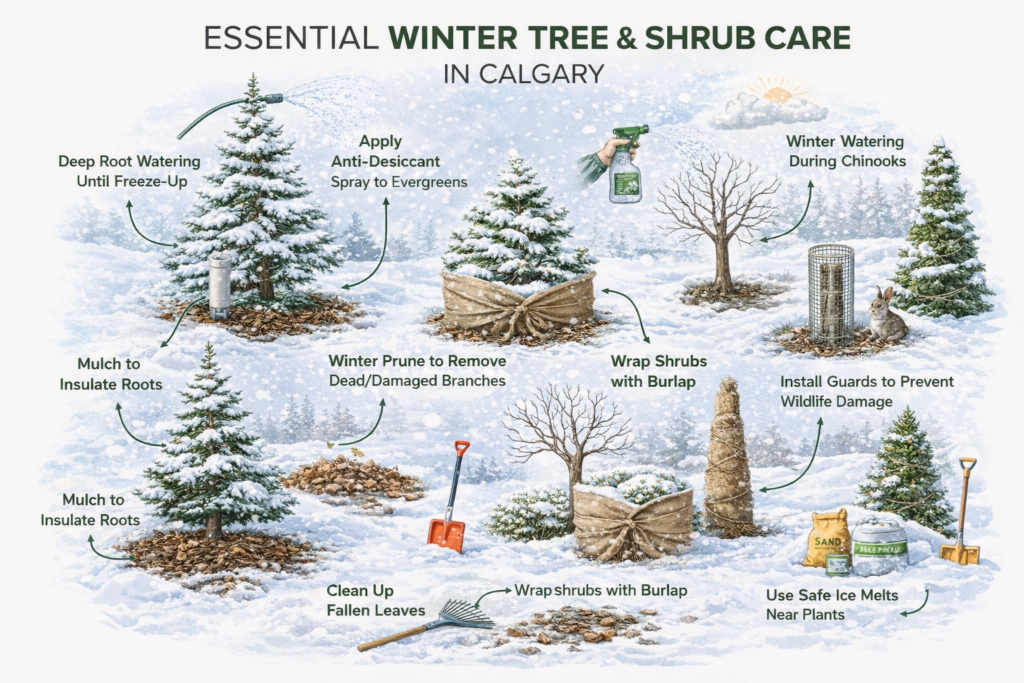
This is arguably the most critical step. Plants need to go into winter with ample moisture in their root zones. Continue to water your trees and shrubs deeply, especially evergreens and any plants planted in the last 3-5 years, until the ground freezes solid. Focus on the drip line (the area under the outer branches) rather than right at the trunk. A slow, deep soak encourages roots to grow deeper, making them more resilient.
Fertilization: Timing is Everything
Avoid high-nitrogen fertilizers in late summer or fall, as they promote tender new growth that will be killed by frost. If needed, use a fall fertilizer higher in potassium (the last number in the N-P-K ratio) to promote root strength and disease resistance.
The Final Clean-Up
Rake up and dispose of fallen leaves from around trees and shrubs, especially if they were diseased during the season (e.g., with apple scab or tar spot). This removes fungal spores and insect eggs that could overwinter and cause problems next year.
Physical Protection Strategies for Winter
Once the ground is cold and plants are dormant, it’s time to put up the physical defenses.
Mulching for Root Insulation
Apply a thick layer of organic mulch, like wood chips or bark, around the base of your plants. This acts like a blanket, insulating the soil. It moderates soil temperature, prevents frost heaving (where soil freezes and thaws, pushing roots out of the ground), and conserves soil moisture. Create a wide, donut-shaped ring of mulch, but keep it a few inches away from the trunk itself to prevent rot and rodent nesting.
Wrapping and Burlapping
This technique is vital for many plants in Calgary.
- Trunk Wrapping: Use commercial tree wrap or plastic spiral guards on young, thin-barked trees like maples, ash, and fruit trees. This prevents sunscald (southwest winter injury), where the winter sun warms the bark during the day, and then it refreezes and cracks at night. It also deters animal chewing.
- Shrub Wrapping: For tender shrubs, like some hydrangeas and roses, and columnar evergreens, create a burlap screen. Don’t wrap the plant tightly in plastic, as this can cook it on sunny days. Instead, drive stakes into the ground around the shrub and staple burlap to them, creating a windbreak that also shades the plant from the winter sun.
Tying and Supporting
For upright evergreens, like cedars and junipers, gently tie their limbs together with soft twine or commercial tree ties. This prevents heavy, wet snow from splaying the branches apart and breaking them. Start from the bottom and spiral upwards.
The Special Case of Evergreens
Evergreens need extra attention in your winter tree and shrub care in Calgary routine because they keep their needles all winter. As mentioned, they continue to lose water vapor (transpire), but can’t replace it if the ground is frozen.
Anti-Desiccant Sprays: These are waxy coatings that can be applied to the needles of broadleaf evergreens (like boxwood) and some conifers to reduce moisture loss. They are best applied in late fall when temperatures are consistently above freezing, and may need a mid-winter reapplication during a warm spell.
Strategic Placement: When planting new evergreens, choose locations sheltered from prevailing west and north winds, often on the east or south side of a building or fence.

Managing Snow and Ice Damage
During the winter, your job shifts to monitoring and gentle intervention.
Snow Removal: After a heavy, wet snowfall, gently brush accumulated snow off the branches of shrubs and small trees using a broom in an upward motion. This prevents breakage. Never shake frozen branches, as they are brittle.
Ice Storms: It’s best to leave ice-covered branches alone. Attempting to remove ice will almost certainly cause more damage. Trust that most healthy trees and shrubs are resilient and will recover as the ice melts naturally.
Salt Damage: Avoid using de-icing salts near sensitive plants like maples, lindens, and evergreens. The salt runoff damages roots and causes needle browning. Use sand, grit, or alternative ice melts marked as safe for vegetation.
Wildlife Deterrence: Keeping Critters at Bay
Rabbits and voles are the primary culprits. To protect young trees and shrubs:
- Install hardware cloth or plastic tree guards around trunks. The guard should extend higher than the typical snow depth to protect against rabbits and be buried a few inches to stop voles.
- For shrubs, consider cylindrical fencing.
- Commercial repellent sprays can be used, but they need to be reapplied periodically, especially after snow or rain.
Winter Watering During Chinooks
This is a pro tip for dedicated gardeners. During an extended warm chinook period in January or February, if there’s no snow cover and the ground thaws, consider giving your evergreens and newly planted trees a deep drink. This can help mitigate desiccation stress. It’s a small step that can make a big difference in a dry winter.
Frequently Asked Questions (FAQ)
When is the best time to start winterizing my trees and shrubs in Calgary?
Begin your fall preparations in late September through October. Physical protections like wrapping and mulching should be applied after a few hard frosts, usually in late October or November, once plants are fully dormant.
Do I need to wrap all my trees?
No. Focus on young, thin-barked trees (especially on the south and west sides), tender shrubs, and columnar evergreens. Mature, well-established trees with thick bark usually do not need wrapping.
Can I prune my trees in the fall for winter?
It’s generally better to avoid major pruning in the fall, as cuts heal slowly and can invite disease. The best time for pruning most trees in Calgary is late winter (February/March) while they are still dormant, or after spring growth for spring-blooming shrubs. Only remove clearly dead, damaged, or dangerous branches in the fall.
My evergreen needles are turning brown on the inside/ south side. Is it dying?
Not necessarily. Some inner needle browning and shedding is normal in fall. However, browning on the outer needles, especially on the south or west side, is likely winter burn from desiccation. The plant may recover in spring with new growth. Ensure it is well-watered until freeze-up and consider anti-desiccant or burlap screening next year.